
Defensible Space for Woodside, Portola Valley and Emerald Lake Hills Homes
Create wildfire defensible space in San Mateo County hills. Cal Fire Zone 0–2 limb-up standards, fuel reduction & brush clearing. Call (213) 468-5153.
Wildland-Urban Interface (WUI) Realities on the Peninsula
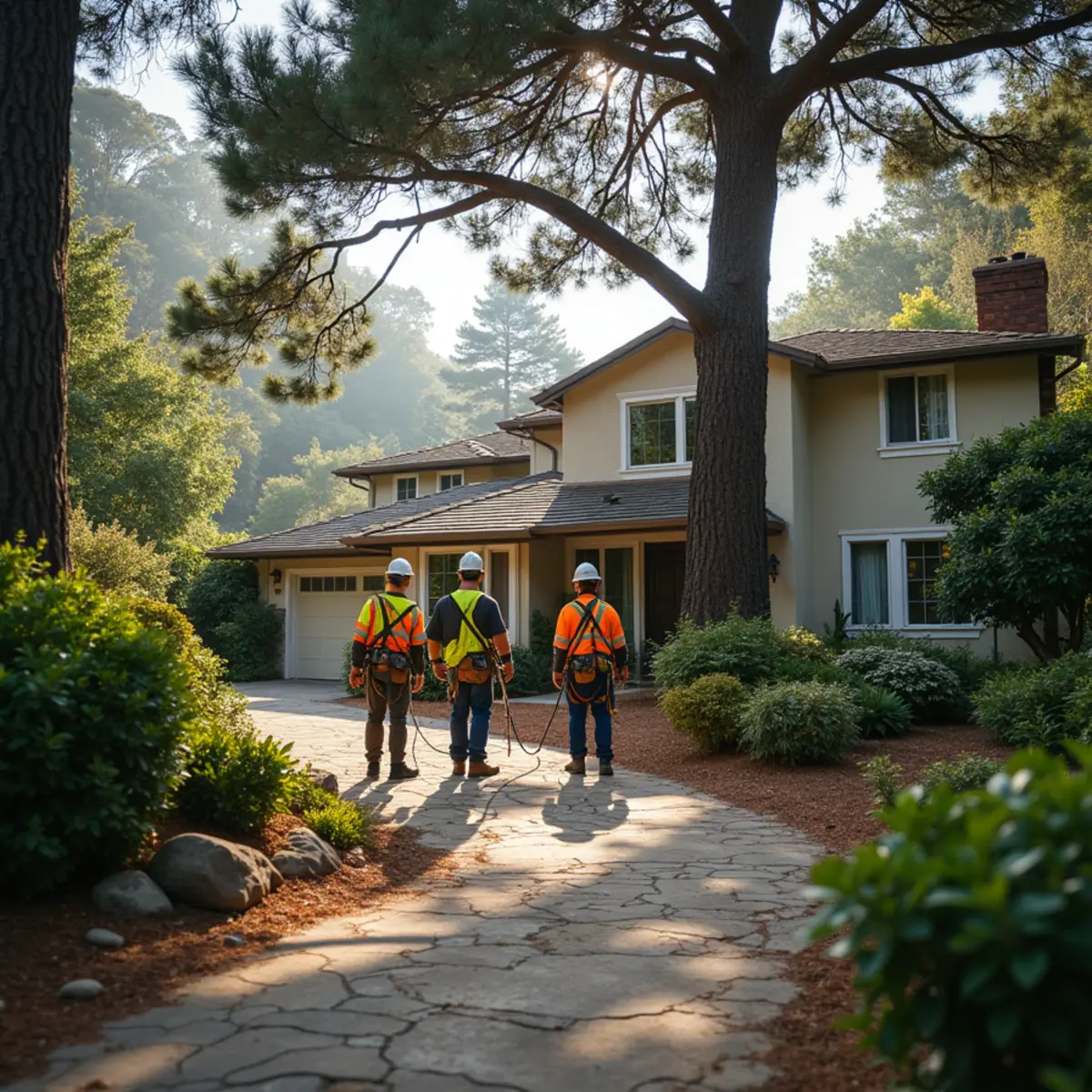
The wooded foothills of San Mateo County—encompassing Woodside, Portola Valley, Emerald Lake Hills, Palomar Park, and Los Trancos Woods—are globally recognized for their breathtaking natural beauty. However, this dense interface where residential architecture meets native forest and chaparral is classified by Cal Fire as a High to Very High Fire Hazard Severity Zone (VHFHSZ).
Steep canyon topography, narrow winding private roads, dense stands of volatile eucalyptus and Monterey pine, and dry Diablo wind events in late summer and autumn create an extreme wildfire environment. Defensible space is not simply about clearing brush; it is a scientifically designed vegetation management perimeter that slows advancing fire, deprives flames of fuel ladders, and provides safe staging zones for fire engine crews protecting your home.
Need Hands-On Arborist Help in Redwood City?
Call (213) 468-5153 to speak directly with our team. We provide rapid emergency dispatch and free written estimates across San Mateo County.
California AB 3074 Three-Zone Defensible Space Standards
Under California Public Resources Code § 4291 and California Assembly Bill 3074, property owners in state responsibility areas must maintain 100 feet of defensible space organized into three distinct management rings:
• Zone 0: The Immediate Ember-Resistant Zone (0 to 5 Feet from Foundation): This critical zone requires complete elimination of combustible materials. Remove all flammable shrubs, tree limbs overhanging rooflines within 10 feet of chimneys, dead leaf litter, and wooden mulch directly adjacent to siding. Replace combustible landscaping with decomposed granite, stone pavers, or non-combustible gravel mulch. • Zone 1: The Lean, Clean & Green Zone (5 to 30 Feet from Structures): Maintain maximum 10-foot spacing between individual tree canopies. Prune all tree branches up 6 to 10 feet from the ground. Remove all deadwood, needles, and combustible brush. Irrigated lawns, succulent groundcovers, and well-maintained specimen shade trees are permitted. • Zone 2: The Reduced Fuel Zone (30 to 100 Feet, or to Property Line): Mowed annual grasses must not exceed 4 inches in height. Space trees to maintain 10 to 20 feet of horizontal crown separation depending on slope grade. Clear all horizontal and vertical fuel ladders.
High-Risk Pyrogenic Trees: Eucalyptus, Monterey Pine & Cypress
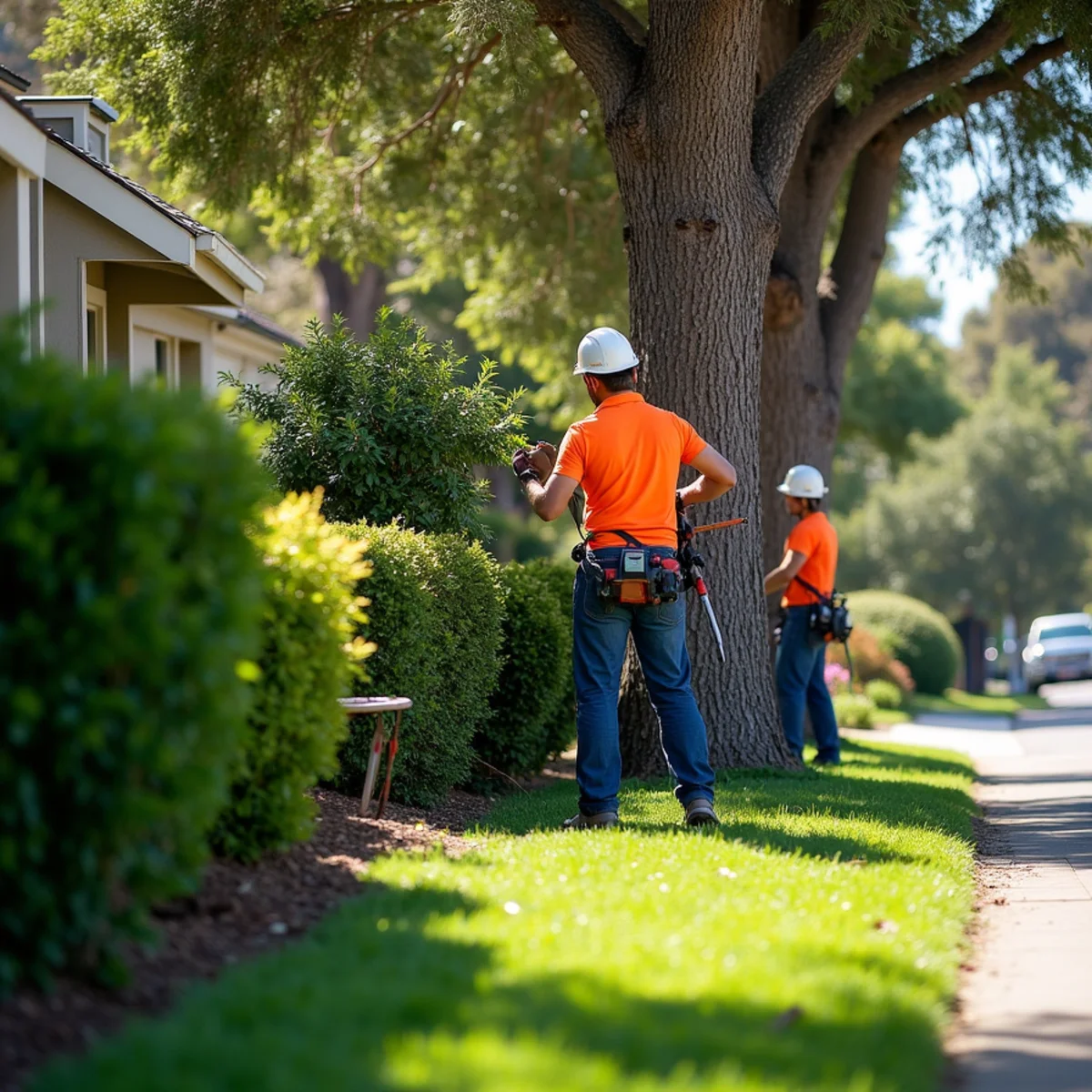
Not all trees pose the same wildfire risk. Fire protection districts prioritize the removal or heavy modification of highly flammable pyrogenic species:
• Blue Gum Eucalyptus (Eucalyptus globulus): Infused with volatile terpenes and volatile oils, eucalyptus canopies produce explosive fire runs. Long peeling ribbon bark forms airborne firebrands that draft miles downwind to ignite structural roofs. • Monterey Pine (Pinus radiata): Aging Monterey pines suffering from pitch canker accumulate deep resinous needle mats and dense deadwood scaffolds that burn with intense thermal heat. • Italian Cypress & Junipers: Often planted as privacy screens along property boundaries, these species contain dry interior deadwood coated with flammable resins, acting like giant structural torches when touched by embers.
Canopy Pruning & Vertical Ladder Fuel Elimination
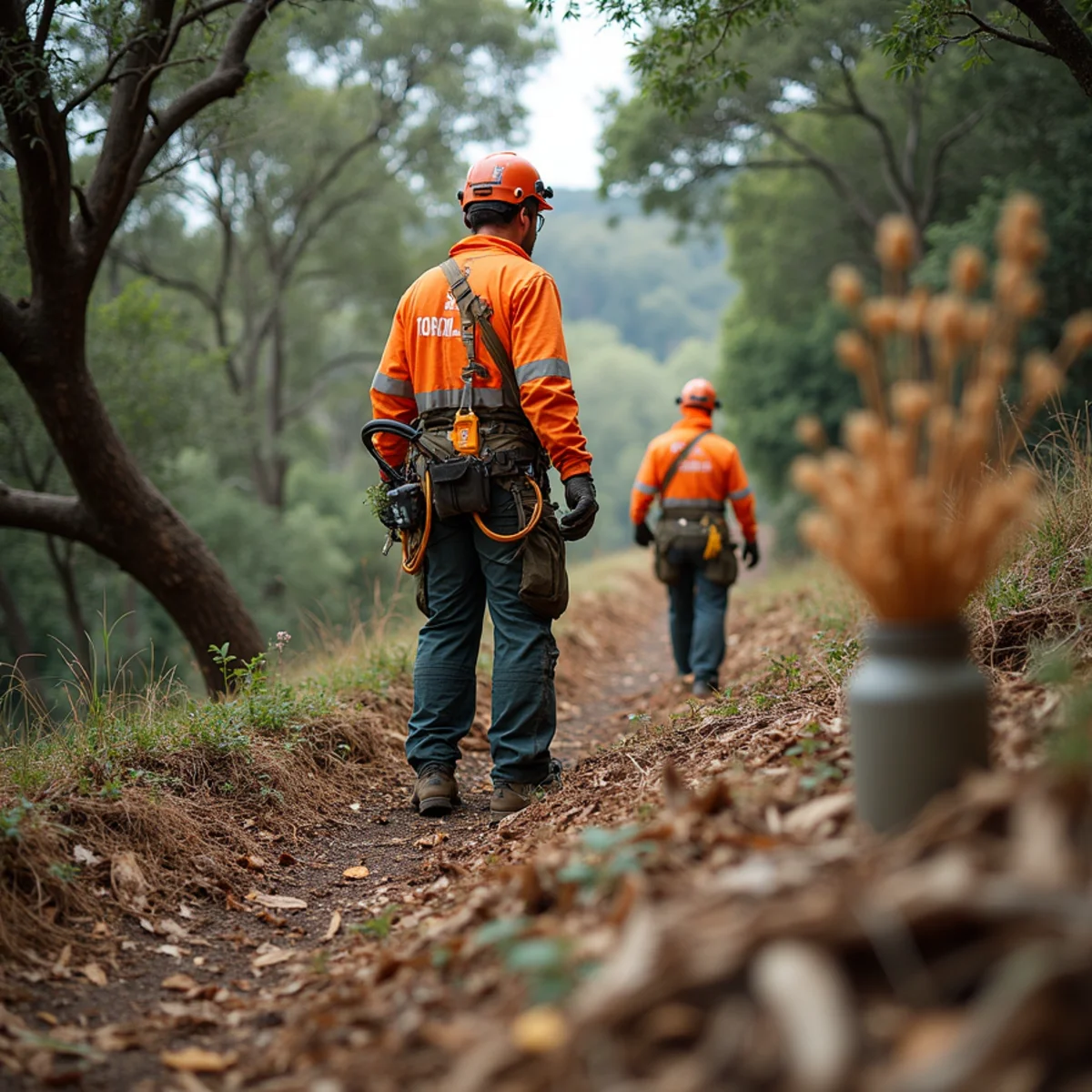
The primary objective of wildland vegetation management is preventing a low-intensity surface grass fire from climbing into the high forest canopy as an uncontrollable crown fire. This is accomplished by eliminating 'fuel ladders':
• Vertical Clearance Standards: Prune lower tree branches up to a minimum of 6 feet above grade, or one-third the total height of the tree for smaller specimens. Ensure shrubs beneath trees do not exceed one-third the distance to the lowest tree branch. • Slope Adjustments for Horizontal Spacing: On flat ground, a 10-foot canopy separation is standard. On moderate slopes (20% to 40% grade common in Emerald Lake Hills), increase canopy separation to 20 feet. On steep canyon slopes greater than 40%, canopies must be separated by at least 30 feet to account for uphill flame pre-heating.
Local Municipal Fire Codes: Woodside Fire Protection District Rules
The Woodside Fire Protection District (WFPD)—serving Woodside, Portola Valley, and unincorporated hill areas—enforces stringent local defensible space codes that exceed state minimums:
WFPD conducts annual property inspections and administers community chipping programs. Under district ordinance, property owners must maintain clear vehicular access corridors along all private roads and driveways: minimum 14 feet of vertical clearance and 10 feet of horizontal vegetation clearance on both sides of the roadway to ensure Cal Fire and municipal fire engines can navigate during emergency evacuations.
Permitting for Fire-Fuel Tree Clearing & Native Replacements
Homeowners often worry that municipal tree preservation ordinances prevent them from clearing hazardous fire-fuel trees. In Woodside, Portola Valley, and Redwood City, fire safety tree removals receive expedited, prioritized administrative review when supported by an ISA Arborist Report or official WFPD fire marshal notice.
Our team manages the entire permit package, documenting fuel density, slope grades, and tree hazard ratings. Following clearance, we help clients plant fire-resistant, drought-hardy native alternatives such as coast live oaks, western redbuds, toyon, and manzanita.
Related Services & Coverage Areas
Related Services
Nearby Service Areas
Frequently Asked Questions
No. Defensible space is selective fuel management, not clear-cutting. Healthy, well-spaced mature shade trees with pruned lower limbs and clean ground beneath provide cooling shade and can remain safely on your property.
Schedule Your Tree Assessment Today
Call (213) 468-5153 for prompt arborist inspections, permit assistance, and transparent estimates in Redwood City and the Peninsula.